03
Heating Repair and Replacement
Texas heating runs a handful of weeks a year and then gets asked to work on the first genuinely cold morning with no warning. That's exactly when faults show up.
Why the first cold snap is when a heater finds its faults
A furnace that sat idle for nine months isn't the same as one that's been cycling all winter. Dust settles on the flame sensor, a pilot assembly that hasn't fired since spring can be slow to catch, and a system nobody's touched since the last cold front is the one most likely to fail exactly when it's finally needed. We treat that first call of the season differently for that reason. It isn't a random breakdown, it's a system meeting demand for the first time in months, and the checks reflect that.
Cover HVAC — Licensed and bonded, TACLA88274C. Call (281) 378-5778.
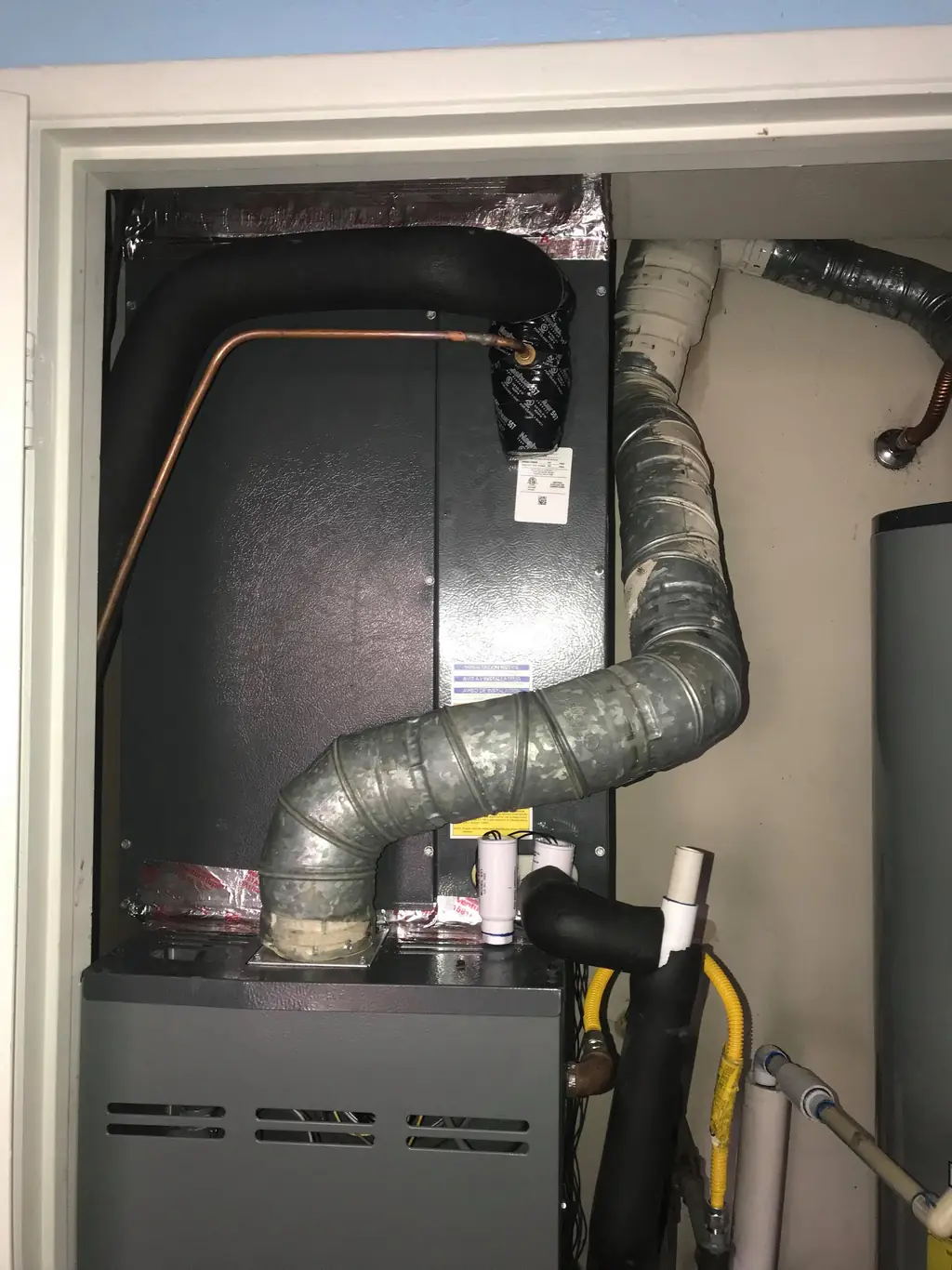
What we actually check on a heating call
A furnace complaint usually comes down to one of a small set of parts. Working through them in order is what separates a real diagnosis from a guess.
Flame sensor and ignition
A dirty or worn flame sensor is one of the most common reasons a furnace lights, then shuts itself back down a few seconds later. It's a small part with an outsized effect on whether the system stays running.
Heat exchangers
This is the part that separates the combustion gases from the air moving through your home. A cracked heat exchanger is a stop work item, not a wait and see one, and it's the first thing we rule out on an older system.
Gas connections and the flue
Every gas fitting and every inch of flue pipe gets checked for a proper seal and a clear path outside. It's a straightforward check, but it's not one that gets skipped.
The closet unit itself
Homeowners tend to think about the box outside, but for heating the unit that matters most is the one in the closet or the attic. Filters, blower motors and the wiring around them all live there, out of sight and easy to overlook.