07
HVAC Maintenance Agreements
A visit the week before a system gets leaned on is worth more than the same visit in the middle of it. Cover HVAC has run maintenance agreements this way since 2018.
Timing matters more than frequency
A maintenance visit isn't valuable because of how often it happens. It's valuable because of when it happens. A system checked the week before summer really sets in catches problems while there's still time to fix them without anyone sitting in a hot house waiting. The same visit run in August, after the heat has already found every weak point, is mostly just triage.
What a visit actually consists of
Electrical readings, capacitor and contactor condition, refrigerant behaviour, coil and drain condition, and airflow. Nothing on that list is dramatic on its own, which is exactly why it gets skipped until something fails.
Cover HVAC — Licensed and bonded, TACLA88274C. Call (281) 378-5778.
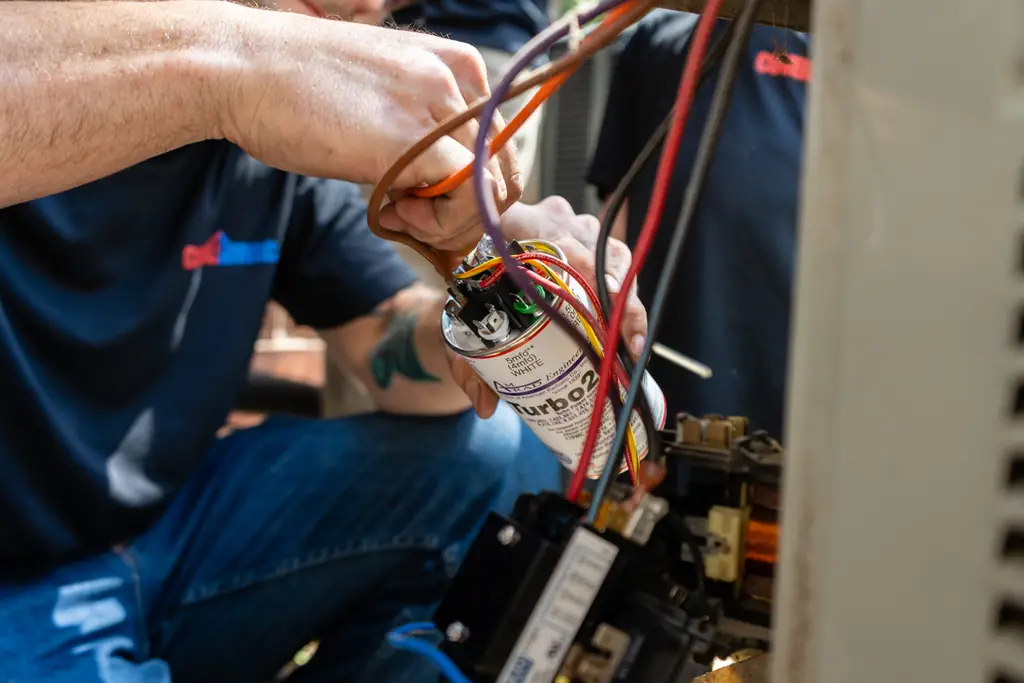
The cheap part that strands people in August
Run capacitors are a small, inexpensive component with an outsized way of ending a summer afternoon. They're also exactly the kind of thing a timed visit is built to catch before it becomes an emergency call.
A capacitor rarely fails without warning. It weakens over months, and a technician checking its readings during a routine visit can see that weakening long before the homeowner ever notices a symptom. Left alone, it's usually the part that finally gives out on the hottest afternoon of the year, at the exact moment the system is working hardest and least able to spare it.
That's the case for timing a visit ahead of the season rather than simply on a calendar interval. Catching a weak capacitor in the spring is a five-minute swap. Catching it in August, after it's already failed, is a same-day emergency call for something that could have been handled quietly on a scheduled visit.
Cover HVAC has run maintenance agreements this way since 2018, checking the parts that tend to fail quietly before the season that would expose them.