Humidity vs Temperature: Why the House Feels Wrong at the "Right" Number
The thermostat can read exactly what you set it to and the house can still feel wrong, because temperature is only half the story.
August 27, 2026 · 3 min read
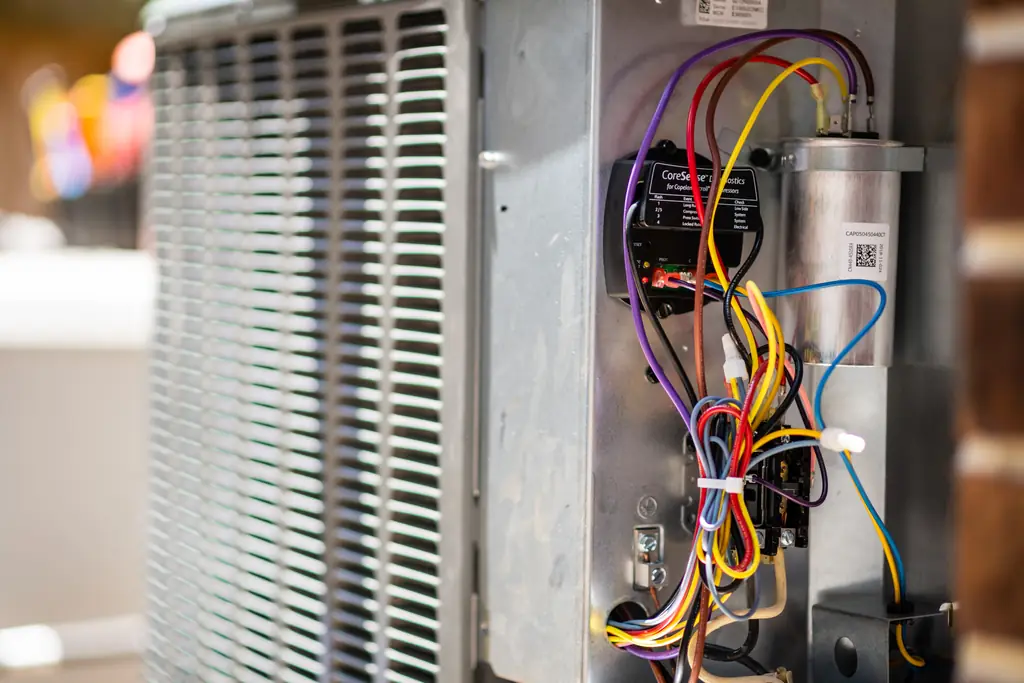
The thermostat says seventy-four. It has said seventy-four for an hour. And the house still feels clammy, a little heavy, not actually comfortable. This is one of the more confusing experiences a homeowner can have, because the one number everyone watches is telling them everything is fine. Temperature is only half of what makes a room feel comfortable. The other half is humidity, and Texas summers make that half do most of the work.
Why humidity changes how air feels
Your body cools itself by evaporating sweat off your skin. Evaporation slows down as the air around you gets more saturated with moisture already, which is exactly what high relative humidity means. At seventy-four degrees and thirty percent relative humidity, a house feels crisp. At seventy-four degrees and sixty-five percent relative humidity, the same air feels warm and sticky, because your body's own cooling system is fighting against air that is already close to full. This is why a house can hit the exact setpoint on the thermostat and still feel wrong to everyone standing in it.
What actually removes humidity
A standard air conditioner does remove some humidity as a side effect of cooling, because moisture condenses on the cold indoor coil as air passes over it, the same way a cold glass sweats on a humid day. The problem is that a system sized correctly for temperature but running in short bursts, because it is oversized for the space, cools the air quickly and shuts off before it has run long enough to pull meaningful moisture out of it. A system that runs in longer, steadier cycles removes far more humidity along the way, even at the identical thermostat setting. This is one of the reasons proper equipment sizing matters more than most people assume, and why bigger is not automatically better.
Where mini-splits fit into this
A sunroom, a garage conversion, or an addition tacked onto the back of a house often sits at the far end of the ductwork, if it is on the ducted system at all, and tends to run hot and humid compared to the rest of the house. A dedicated mini-split for a room like that runs its own independent cycle sized to that one space, which tends to manage both temperature and humidity in that room far better than trying to force more air down a duct run that was never sized for it. One customer's own experience with a sunroom mini-split included learning that leaving it running steadily, rather than switching it on and off, kept the room noticeably more comfortable, which lines up exactly with how humidity removal actually works.
- A house that feels clammy even when the thermostat reads the setpoint
- Musty smells that come and go with the weather rather than staying constant
- Condensation on windows or cool surfaces during humid stretches
- One room, often an addition or sunroom, that always feels worse than the rest
- A system that short-cycles, running for only a few minutes at a time
Why sealing the house matters too
Humidity does not only enter a house through the air conditioning system's own limits. Gaps around exterior doors, unsealed attic access hatches, and bathroom or kitchen exhaust fans that vent poorly all let outside moisture in directly, working against whatever the system is managing to remove. A house that is otherwise well sealed gives the air conditioner a fair fight. A house leaking humid outside air in through a dozen small gaps is asking one system to fight a battle it was never sized to win, no matter how well it is running or how recently it was serviced.
Getting the balance right
Fixing a humidity problem usually starts with confirming the system is actually sized and running the way it should be, rather than assuming a bigger unit or a lower thermostat setting will solve it. The indoor air quality page covers filtration and the parts of the system most people never think about, and the heat pumps page has more on where a mini-split makes sense as a targeted fix rather than a whole-house one. Cover HVAC has been sorting out exactly this kind of problem across Montgomery County and the Brazos Valley since 2018, and the crew can be reached at (281) 378-5778.
Cover HVAC, (281) 378-5778
Call (281) 378-5778More articles
What to Check Before You Call When Your AC Quits on a 100-Degree Afternoon
A handful of five-minute checks that either fix the problem or tell you exactly what to say when you pick up the phone.
Why Your Attic Ductwork Decides How Every Room Actually Feels
The condenser in the yard gets blamed for problems that usually start with the ducts nobody ever sees.