What a Maintenance Visit Actually Covers, and Why the Timing Matters
The value of a maintenance visit has less to do with how often it happens and more to do with when.
August 27, 2026 · 4 min read
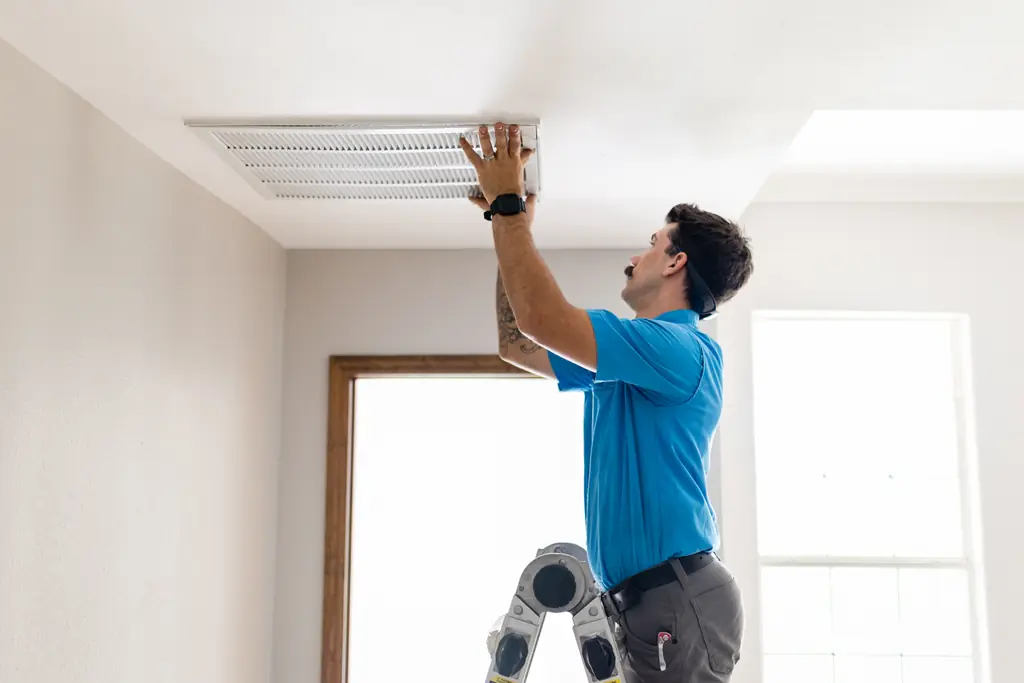
Maintenance is one of those words that gets used so often it stops meaning anything specific. Ask most people what actually happens during a maintenance visit and they will shrug. It is worth knowing, because the difference between a system that lasts and one that fails mid-summer often comes down to a handful of specific checks, done at the right point in the year rather than whenever there happens to be time.
The electrical side
A technician checking a condenser looks at the run capacitor and contactor first, because those are the parts that fail most often and give the least warning beforehand. Connections get checked for looseness or corrosion, since a loose electrical connection generates heat, and heat is what eventually burns a wire or a terminal. Amperage draw on the compressor gets measured against what the equipment's nameplate says it should be pulling. A motor drawing noticeably more current than it should is a motor working harder than it is supposed to, often months before it actually fails outright.
The refrigerant side
Refrigerant charge gets checked against the manufacturer's specification for the outdoor temperature that day, using gauges connected to the service ports. A system low on charge will still blow air and will still feel like it is working, right up until it is not cooling nearly as well as it should and the compressor is running longer than it needs to just to get partway there. This is one of the least visible problems a homeowner can have, because nothing looks wrong from the outside.
The airflow side
Coils, both indoor and outdoor, get checked for buildup. A dirty outdoor coil cannot reject heat as well, which makes the whole system work harder for the same result. The indoor coil, tucked inside the air handler, is where humidity actually gets pulled out of the house, and a coil coated in dust does that job worse even before it starts causing airflow problems. Filters get checked, drain lines get checked for algae growth and blockages, and the blower gets checked for the kind of dust buildup that quietly cuts airflow over a couple of years without anyone noticing.
The heating side does not get to skip a visit
A furnace or air handler's heating components do not run often in this part of Texas, sometimes for only a handful of weeks a year, and that light use is exactly why they deserve their own look rather than being lumped in as an afterthought to the cooling check. Flue connections get checked for a solid seal, since a heating system's exhaust has to leave the house rather than the living space. Gas connections, where present, get checked for leaks. A component that sits idle for eleven months and is then asked to work without warning on the first genuinely cold morning is exactly the kind of thing maintenance is meant to catch ahead of time rather than after it fails.
- Run capacitor and contactor condition on the outdoor unit
- Electrical connections and amperage draw against nameplate values
- Refrigerant charge against the manufacturer specification
- Indoor and outdoor coil condition
- Condensate drain line and float switch operation
- Filter condition and blower cleanliness
Why the calendar matters more than the count
A maintenance visit done in April, before the first real hundred-degree stretch, catches a weak capacitor or a low refrigerant charge while there is still time to address it on a normal schedule. The same visit done in August, after the system has already been leaning on a marginal part for months, is catching the same problems too late to avoid an emergency call. Timing before the season a system gets leaned on hardest is worth more than doing it twice as often at the wrong moments.
A house that runs a heat pump instead of a separate furnace has the same timing question, just on both ends of the year. The same equipment that cools the house in July is what heats it in January, which means a single system doing double duty benefits from a check before each season it is about to carry, rather than one annual visit that happens to land in whichever month is convenient. A commercial building has its own version of the same logic: a failure on a normal weekday is an inconvenience, but a failure on the one day a walk-in cooler or a server room actually needs the system working is a different kind of problem entirely, and it is exactly the kind of failure a well-timed visit is meant to catch first.
The maintenance agreements page has more detail on what a standing arrangement looks like. Cover HVAC has run maintenance agreements since 2018 for homes and light commercial buildings across Montgomery County and the Brazos Valley, and can be reached at (281) 378-5778, Monday through Saturday.
Cover HVAC, (281) 378-5778
Call (281) 378-5778More articles
What to Check Before You Call When Your AC Quits on a 100-Degree Afternoon
A handful of five-minute checks that either fix the problem or tell you exactly what to say when you pick up the phone.
Why Your Attic Ductwork Decides How Every Room Actually Feels
The condenser in the yard gets blamed for problems that usually start with the ducts nobody ever sees.